

A copilot that builds, reads, and argues with you.
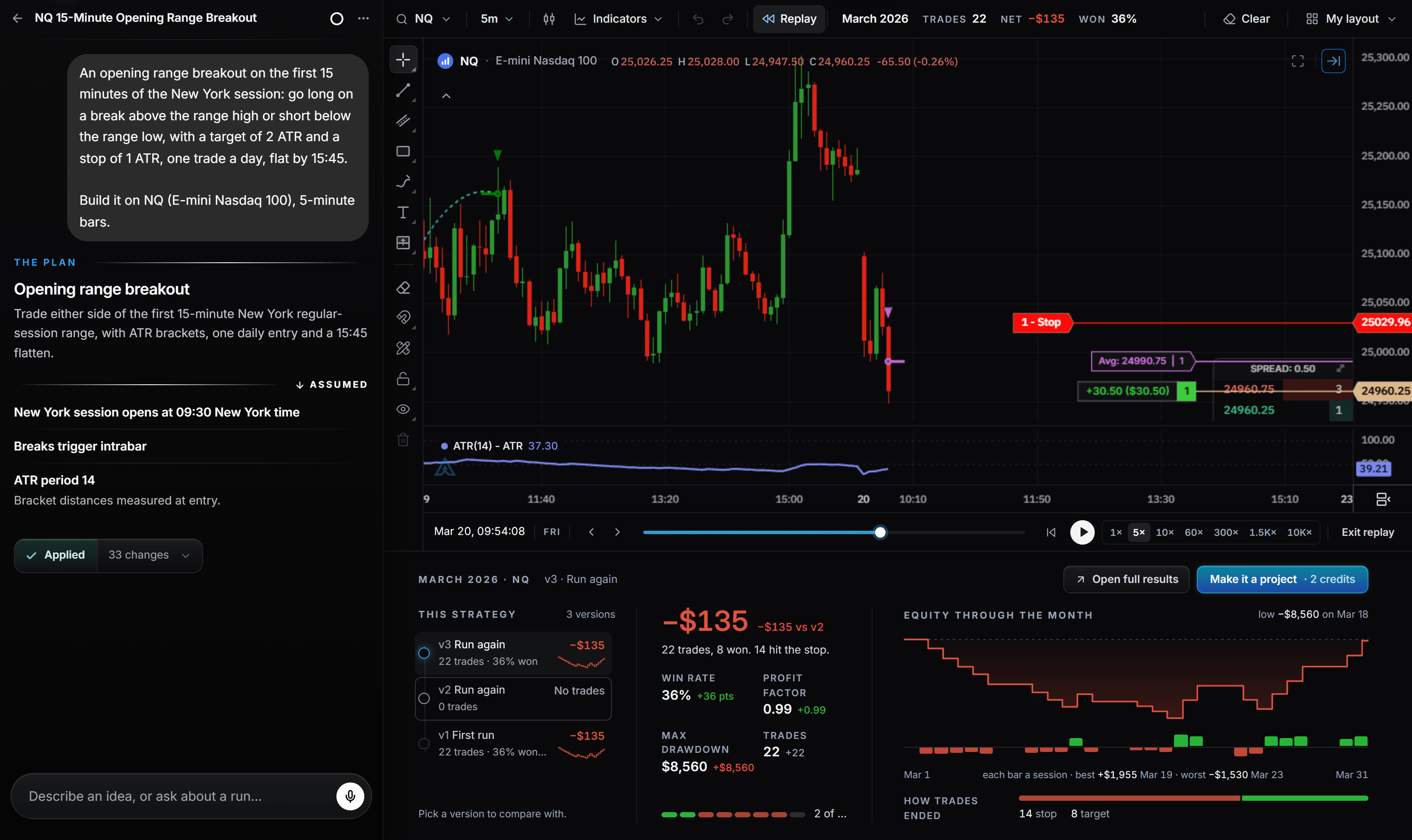
Algo turns an idea in plain English into a strategy you can run, reads every result with you, and says plainly when the evidence is not there yet. It knows where you are in a project, and what the cheapest next step is.
Simulated results. They have inherent limitations. Read the full statementHide the statement
These results are based on simulated or hypothetical performance results that have certain inherent limitations. Unlike the results shown in an actual performance record, these results do not represent actual trading. Also, because these trades have not actually been executed, these results may have under-or over-compensated for the impact, if any, of certain market factors, such as lack of liquidity. Simulated or hypothetical trading programs in general are also subject to the fact that they are designed with the benefit of hindsight. No representation is being made that any account will or is likely to achieve profits or losses similar to these being shown.
It plans before it builds, and checks before it shows you.
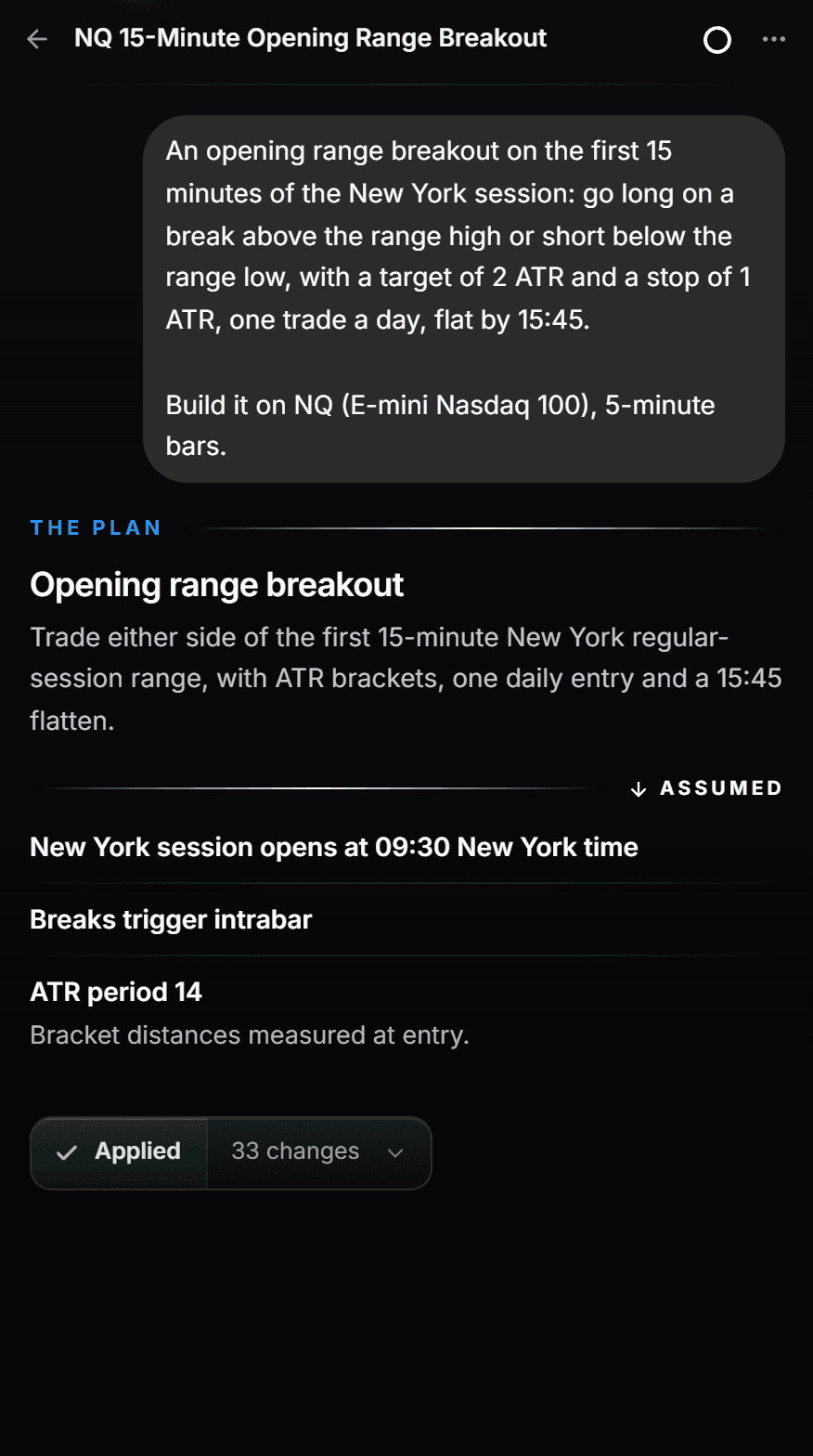
Ask for a strategy the way you would describe it to a colleague. Algo writes a short plan, says what it assumed (the session, the hours, how a breakout is judged), then builds the strategy and runs the platform’s own checks on it, fixing what they find.
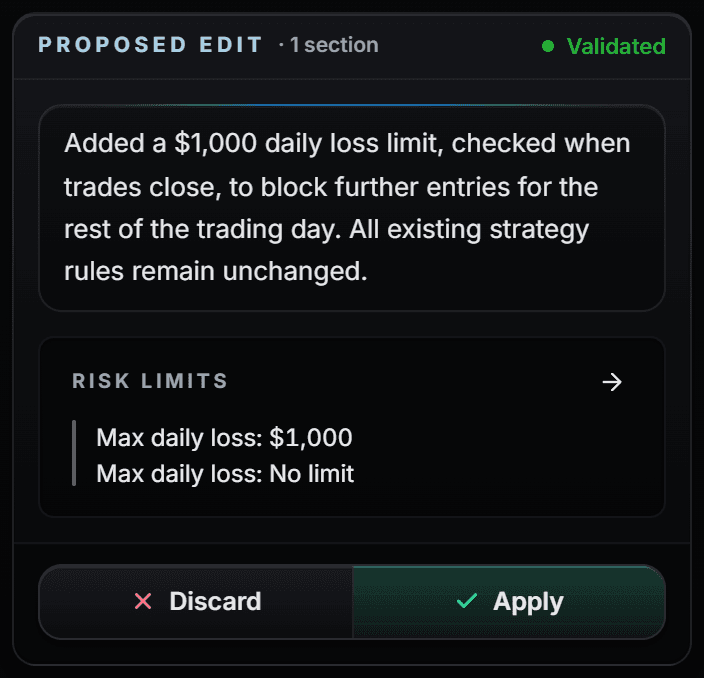
What comes back is a proposal: every entry, exit and limit in plain words. Apply it or discard it; every change can be undone. When a request cannot be built as asked, Algo says so and leaves your strategy as it was.
Ask why any trade happened.
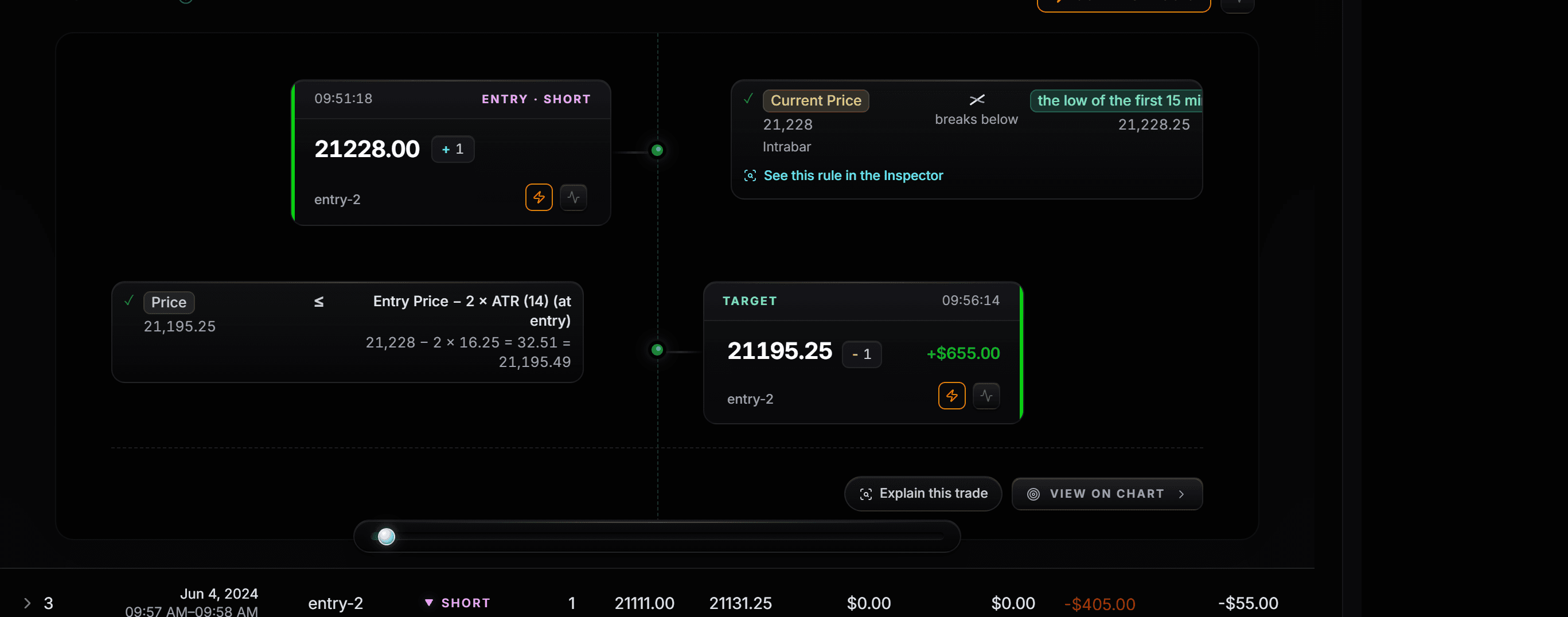
Pick a trade, or let Algo pick a telling one, and it replays the bars that led up to it and walks through each rule that fired, with the values the strategy read at that moment.
It is the fastest way to find the gap between the strategy you meant and the one you built.
Simulated results. They have inherent limitations. Read the full statementHide the statement
These results are based on simulated or hypothetical performance results that have certain inherent limitations. Unlike the results shown in an actual performance record, these results do not represent actual trading. Also, because these trades have not actually been executed, these results may have under-or over-compensated for the impact, if any, of certain market factors, such as lack of liquidity. Simulated or hypothetical trading programs in general are also subject to the fact that they are designed with the benefit of hindsight. No representation is being made that any account will or is likely to achieve profits or losses similar to these being shown.
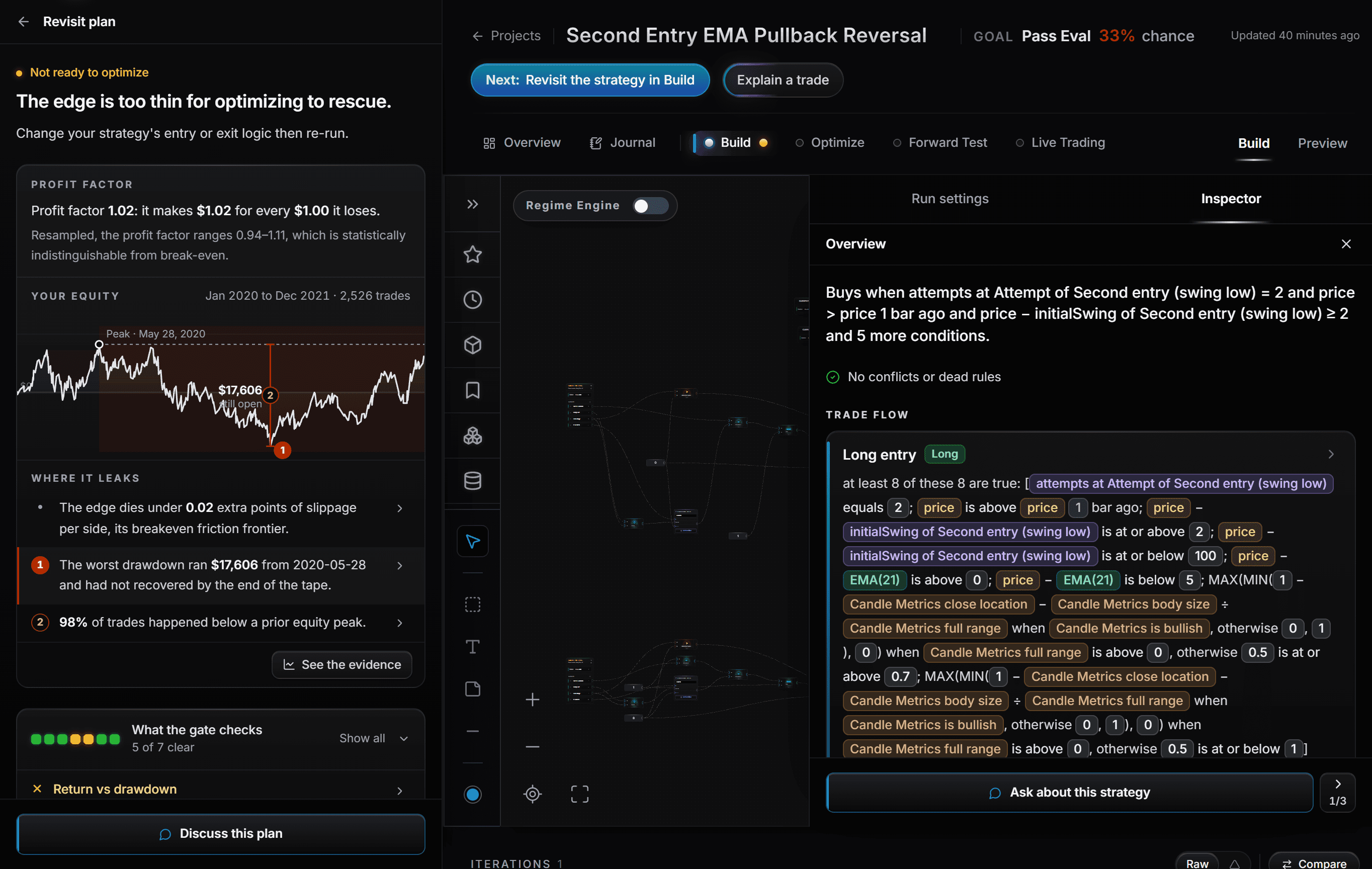
It reads results the way a skeptic would.
A good-looking run is where Algo starts asking questions: how many trades the result rests on, how much of it depends on the order of a few winners, what the costs do to it, which rule ends the account.
When the project’s checks hold a strategy back, Algo lays out every blocker and a repair plan ranked by cost, and it will not suggest tuning a parameter to get past a test.
Simulated results. They have inherent limitations. Read the full statementHide the statement
These results are based on simulated or hypothetical performance results that have certain inherent limitations. Unlike the results shown in an actual performance record, these results do not represent actual trading. Also, because these trades have not actually been executed, these results may have under-or over-compensated for the impact, if any, of certain market factors, such as lack of liquidity. Simulated or hypothetical trading programs in general are also subject to the fact that they are designed with the benefit of hindsight. No representation is being made that any account will or is likely to achieve profits or losses similar to these being shown.
Priced per turn, from the same credits as a backtest.
- A question
- 2 credits. Ask about an idea, a result, a rule or a market.
- An edit
- 4 credits. Change part of a strategy, or a search plan.
- A full build
- 8 credits. A strategy from a description.
- Free accounts
- 60 credits every month, for the copilot.
- What it will not do
- Promise a result, or trade for you. Live execution is on AlgoLift's roadmap and not available yet.