

Tune a strategy without fooling yourself.
Trying enough settings will always find a beautiful backtest. AlgoLift plans the search before it runs, counts every setting it tries against a budget, discounts the winner for the luck of the search, and tests each pick on months the search never saw.
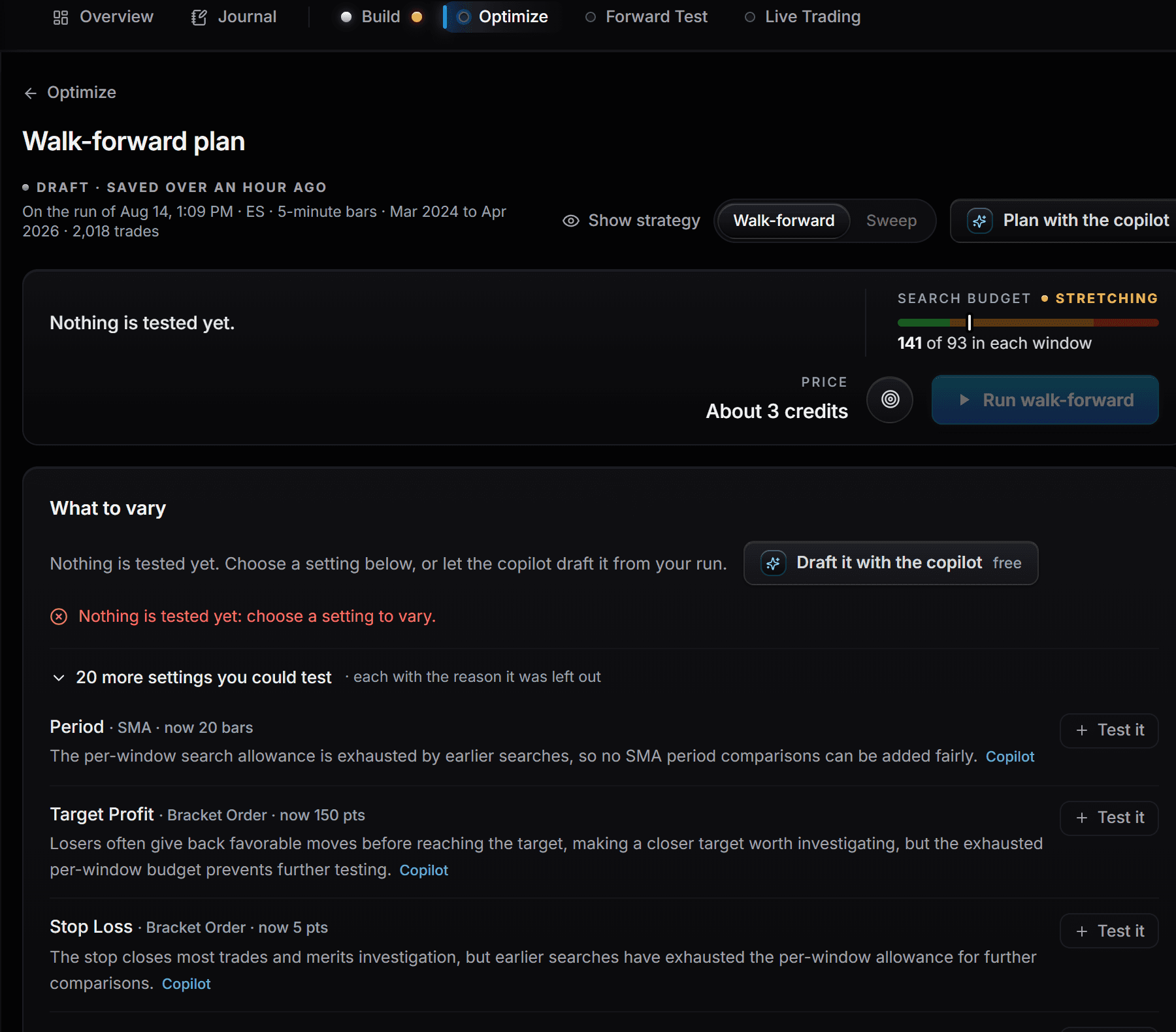
Decide the search before you see its results.
A plan names what will vary and over what range, how the winner will be chosen, and which months the search may use. Algo drafts the first version from your run’s own trades and checks every reason it gives; you change any of it.
The plan’s budget says when the search is honest, when it is stretching, and when it has reached the point where the best result is mostly noise. The plan is frozen at launch, so the results are judged against what you said beforehand.
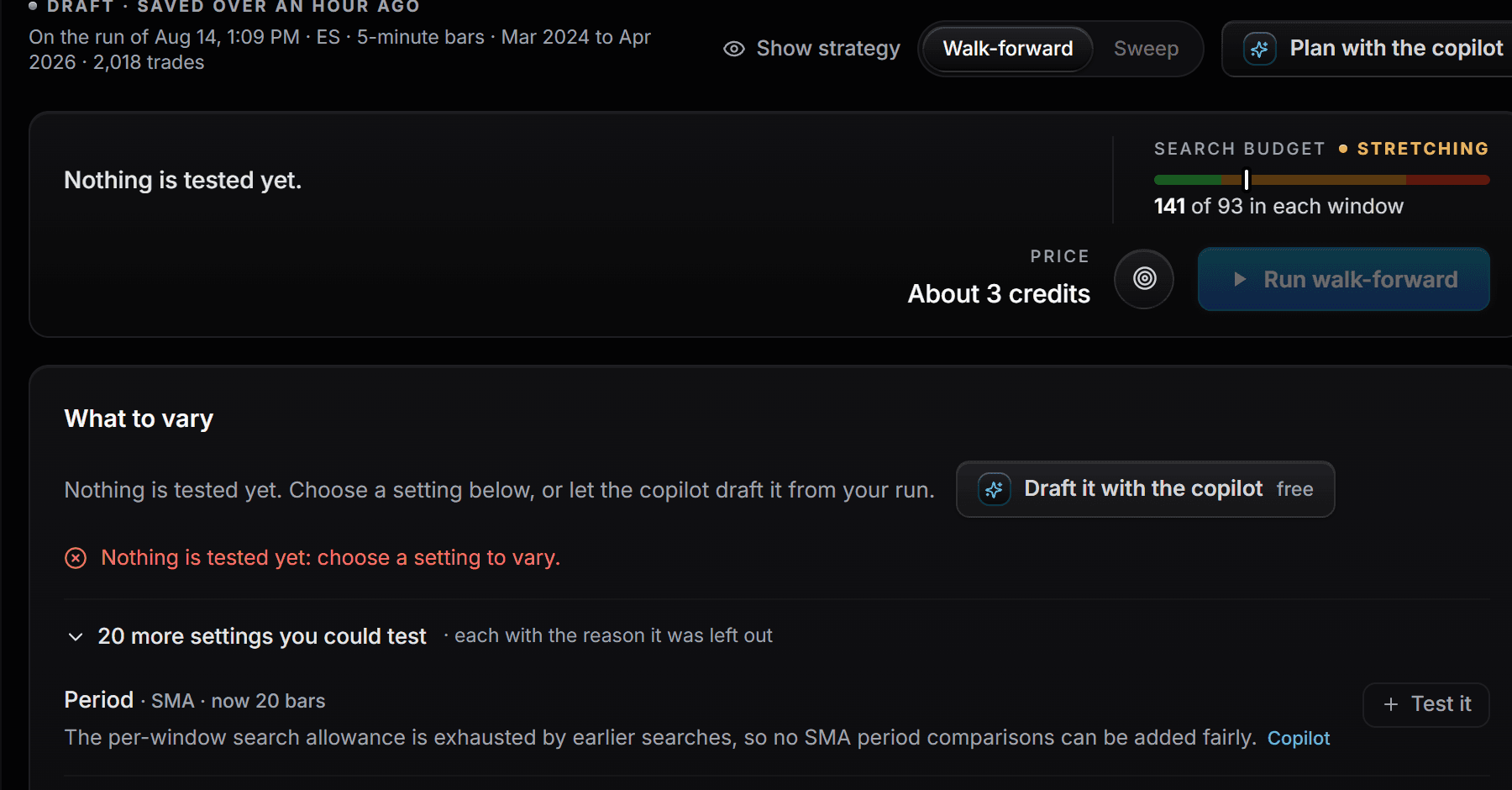
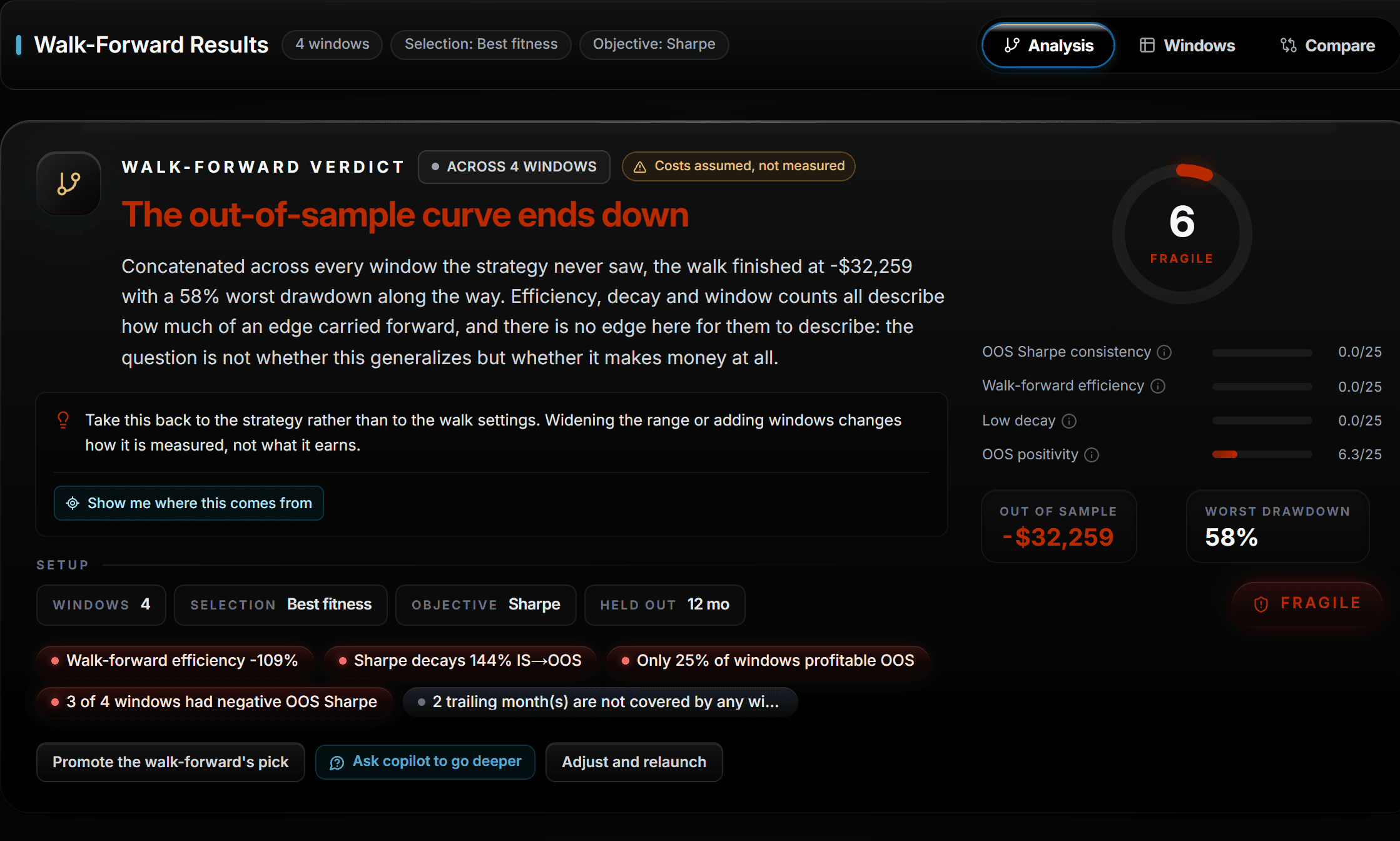
Every pick tested on months it never saw.
Walk-forward fits the strategy on one window, then trades the pick on the next, window after window. The result you read is stitched only from those unseen months.
When a sweep is meant to be walk-forwarded, it stops early by default, so the walk-forward’s test windows are months the sweep never touched.
Simulated results. They have inherent limitations. Read the full statementHide the statement
These results are based on simulated or hypothetical performance results that have certain inherent limitations. Unlike the results shown in an actual performance record, these results do not represent actual trading. Also, because these trades have not actually been executed, these results may have under-or over-compensated for the impact, if any, of certain market factors, such as lack of liquidity. Simulated or hypothetical trading programs in general are also subject to the fact that they are designed with the benefit of hindsight. No representation is being made that any account will or is likely to achieve profits or losses similar to these being shown.
What keeps the search honest.
- The Luck Test
- Before Optimize opens, your entries are compared with the same trades taken at random times. If they do no better, there is nothing to tune yet.
- One budget
- Sweeps and walk-forwards draw on one search budget per project, so a second search is not a fresh start.
- Discounted winners
- Results show the best result's Sharpe deflated for the number of settings tried, and the chance it was overfit.
- Three ways in
- Walk-forward when the history supports it, a parameter sweep when it does not, or keep your settings and say so on the record.
- One champion
- Whichever way you choose, one strategy goes forward, labelled by how it was picked.